עלייה לתורה – Torah blessings (Aliyah) – Алия Ла Тора

версия для печати – click here for a ‘Printable version‘ ברכות עליה לתורה Алия Ла Тора


Алия Ла Тора

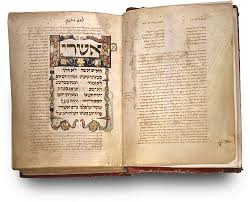
Вызванный к Торе  держась за рукоятки деревянных стержней книги. Ему показывают начало и конец отрывка и он произносит вслух:

Барху эт Адо-най амэворах

Община отвечает:  Барух Адо-най амэворах лэолам ваэд

Вызванный к Торе повторяет ответ общины:

Барух Адо-най амэворах лэолам ваэд

И произносит браху:

Барух ата Адо-най эло-эйну мэлех аолам, ашер бахар бану миколь аамим,

вэнатан лану эт торато.

Барух ата Адо-най нотэн атора.

Рав прочитает вслух из
после этого вызванный к Торе произносит заключительную браху:

Барух ата Адо-най эло-эйну мэлех аолам

ашер натан лану  торат эмэт

вэхайей олам ната бэтохэйну.

 Барух ата Адо-най нотэн атора.

תודה לאורטל על העזרה בתרגום


Literary Analysis of Psalm 3

david abshalom - psalm study    Click here to read “Psalm Three: Translation of the Song”

Structure and meaning are striking complements in Song 3; where and when words occur in the verses sound the singer’s intent as surely and harmoniously as the strings of his lyre voice their notes together. Thus: verses 2 and 3 contain three repetitions of the word “abundant” (the three Hebrew words for “abundant” differ from each other slightly but share a common root: ר.ב.ב. ) – the singer is lamenting the number of his foes. He feels threatened both physically and spiritually, as he declares how his enemies afflict his “soul’ with their taunt, “There is no deliverance for him in God” (v. 3). Certainly the word “deliverance” (Hebrew: יְשׁוּעָתָה ) is deliberately chosen by his foes to show their derision. But, as the singer claims the verb “deliver” in verse 8 and the noun “deliverance” in verse 9,  calling upon God to save him, he proves his victory over his enemies. These two variations, verb and noun, building as they do upon his foes’ scornful use of  “deliverance”, sound a three-word chord that easily overpowers the foes “abundant” numbers.  Their scorn the singer transforms into his affirmation of belief in God’s deliverance of him. That his victory is a moral one, his faith in God makes clear:


No awe have I of tens of thousands – a nation – that,

surrounding [me], set [themselves] upon me.

(v. 7)


That it is a physical victory as well, he suggests in verse 8, declaring of God, “You have struck down all my enemies [on the] cheek, the teeth of the wicked You have broken”. God’s reprimand has deprived the singer’s foes of clarity of speech and the ability to chew. Thus they are deprived of both communication and nourishment, just as they had tried to deny the singer his sustenance — his faith, that is, that God will respond to and save him.


The first verse of the song says it was composed by King David as he fled from his son, Absalom. The name, Absalom, means “my father is peace”. The bitter irony, never anticipated by the rebellious son, is that his revolt against his father provokes not David’s vengefulness but, on the contrary, his compassion. Absalom’s betrayal actually proves what he would deny – the truth of his name. For David’s song ends, not with a triumphant declaration of his victory over Absalom, but, rather, with his attributing his deliverance to God. And, showing the true quality of kingship, he invokes God’s blessing not upon himself but upon the entire people, Israel:


To Adonai deliverance [belongs]; upon Your nation, Your blessing.

(v. 9)


david abshalom - psalm study


Literary Analysis of Psalm 2

אשרי ashrai - psalm study

Click here to read “Psalm Two – Translation of the Song”

The second song is both a completion of and contrast to the first. The first song is stately, composed of elegant generalities; the tone,  overall calm. The second is passionate; direct quotations break the flow, and the overall effect –but for the final line– is unsettling.

The opening line, in its very asking of why nations conspire, predicts their plots’ outcome: because their conspiracies are rooted in arrogance –in vanity– their purpose is in vain; it can reach no fruition –their “plottings” are in vain.
The second verse makes clear that it is against God that the nations conspire. Again, their defeat is implicit: the plotters are named “kings of the land”. They are merely mortal.
The kings’ battle cry is heard in verse 3; it defines God as their oppressor. But their rallying call –“cast away [God’s] ropes from us!”– is itself their unwitting declaration of defeat: they are puppets God can command at will; the cords and ropes, the puppeteer’s strings. Nor do they realize that their very rebellion is, in fact, their acknowledgement of God (they cannot rebel against what does not exist).
No wonder, then, that verse 4 describes God’s laughter at and derision of the conspirators’ illusions and pretensions. It is God Who is “the Master”; they, merely kings.

Verse 5 voices God’s anger, recounting God’s words, which confirm that it is God Who has appointed the king of the people Israel; the implication is that the “kings of the land” have been given no divine authority.

Thus verses 1 to 6 make up the first section of the song. Verses 7 to 9, the second. In the second section, God assures the king of the Israelites of his legitimacy as ruler: “You are my son, I, from today on, give birth to you” (v.7). (The context of the verse makes a literal interpretation invalid; birth is here a metaphor, not an actuality.) And, proving his right to kingship, it is the king himself who recalls God’s decree: “I will tell…” ( verse 7) But though the mood of these middle verses is calm, in contrast to those of the song’s first section of verses, the intent is not: “You [God’s anointed ruler] will smash them [the nations] with a rod of iron; like a potter’s vessel, you will shatter them” (verse 9). Iron and clay –one durable, one not– are opposite elements, but both are equally fragile against God’s bestowal of might upon the king of the Israelites.

The third section of the song — verses 10 to 12– is both a warning and a declared moral: the composer of the song speaks directly to the kings of the earth — and, this time, makes clear by his appellation, “judges of the earth”, that their domain is limited in contrast to God’s – telling them that their homage must be to their one “Master”, God.  Verse 11 uses a startling phrase: “rejoice with trembling”: that is, though they themselves command earthly kingdoms, they must tremble before God even as they acknowledge God’s rule; and, in doing so, their awe and exultation must be accompanied by humility, by trembling.
The final line of the song completes the cycle. Its opening word, “Happy”, is both an echo and a reminder of the opening of Psalm One. Together, the two songs resolve in a chord of steadiness and calm; in the reassurance of God as shelter.


אשרי ashrai - psalm study


Literary Analysis of Psalm 1

אשרי ashrai - psalm study

Click here to read “Psalm One: Translation of the Song”

“Happy” — the first word of the first line of the first of King David’s praisesongs. The Hebrew, “ashrai”, voices the same opening note of joy as does the English, but, simply because the word “ashrai” starts with an “aleph”, the first letter of the Hebrew alphabet, the Hebrew underscores a sense of joyful beginning that the English word cannot.
The auspicious opening, whatever the language, makes even more jarring the repeated negatives that follow: “Happy the man who has not walked in the counsel of the wicked ones, and in the way of sinners has not stood, and in the gathering of the scornful has not sat” (v.1). What the first verse does, then, is to establish the dichotomy that is the song’s basis: the righteous, who delight in God’s teachings, will flourish like a tree — they will thrive and prosper (verses 2 and 3); in contrast, the wicked, who violate God’s teachings, will, like chaff, be swept away (verses 4 and 5).
Verse 3 is perhaps the most beautiful verse of the song: “And he will become like a tree planted by streams of water,
that gives its fruit in its proper time, and its leaf does not wither, and all that he does will succeed.
“ The Hebrew of verse 3, “streams of water”, פַּלְגֵי מָיִם, suggests a forking, a stream that takes more than one direction. And, with this image, the song describes the two opposite directions of the wicked and the righteous. That both are imagined as water may indicate their common source: both beginning with the possibility of creativity but one leading to what the singer calls happiness, the stream following its natural course; the other, not merely to unhappiness, but indeed, to promise cut off, the stream blocked from further flow. The image of the dried-up stream is given another form in verse 4, the wing-blown chaff; thus, each image – the one implicit in Hebrew, the other explicit in Hebrew and in English – describe an extinction that allows neither growth nor rebirth.
But it is the striking phrase — “the assembly of the righteous ones“– in verse 5, that both re-iterates and explains the opposite fates of the righteous and the wicked: the righteous will form a community; the wicked will be outcasts. The negatives of verse 1 are thereby clarified: the righteous must not walk, stand or sit with the wicked; must not, that is, include them in their community. The progression — walk, stand, sit– reverses the natural order of human milestones: the infant first sits, then stands, then walks. Thus the wicked are diminished even by the verbs of the verse line.
The song that begins with the word “happy” ends with the word “lost”. A striking contrast. A warning, of course, to the wicked, but also to the righteous not to seek them out.
The Hebrew, however, once again goes beyond the English translation: the English song cycle ends song 1 at this grim point, “lost”. The Hebrew continues the cycle into song 2, so that the second song completes the first.
Surprisingly, Song 1 in King David’s praisesongs does not acknowledge him as the composer. Speculations based on history can be argued. But perhaps the song itself, in obscuring its composer, is putting forth, instead, its ideal of community.

אשרי ashrai - psalm study


David starts as a shepherd – few anecdotes

Samuel1 16:11 And Samuel said to Jesse, “Are these all the young men?” And he said, “The youngest still remains, and behold, he is tending the sheep.” And Samuel said to Jesse, “Send and bring him, for we shall not sit down until he comes here.”

As mentioned David was excluded estranged from his family (see “king David’s family tree” and “David suspected to be a bastard/Ben Temurah“). Therefore he was sent afar and alone in the desert, as the family’s shepherd. In a retrospect we can understand it was a step many of the Israelite’s leaders went through – being ‘tested’ as shepherds (Avraham, Itzchak, Yaakov, twelve tribes, Moshe, king Saul). Maybe as the verse in Psalm 119:71 states “It is good for me that I was afflicted, in order that I learn Your statutes.” – There when I (King David) was alone, estranged, I ‘discovered’ Your closeness.

Uniqueness of being a shepherd:david shepherd psalms study

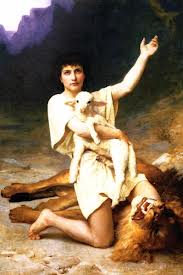
– The shepherd is in hardship, as we see David was taking the flocks in the desert, and had to fight wild animals in order to save them. (Samuel1 17:35-36) “And David said to Saul, “Your bondsman was a shepherd of sheep for his father, and there came a lion and also a bear, and carried off a lamb from the flock.”

– It also shows the devotion David has to the flocks, whereas he could just leave the one ship to the wild animal and not risk his life. David apparently chose otherwise.

– Being alone with the herds, brings with it  two dangerous things: 1) No one sees you 2) sheep do not complain. The moral of a shepherd is tested in that time. (as we see today many unfortunate cases of people in the same situation who torture the flock, and mis-treat it in times of hardship).

– Last interesting anecdote, Rash”i’s commentry on Psalm 78″71-71: “And He chose His servant David and took him from the sheepcotes. From behind the nursing ewes He brought him, to shepherd Jacob His people and Israel His heritage.

Rash”i: From behind the nursing ewes He brought him: For he would shepherd the nursing ewes for his father, because he was merciful and would bring the kids first and feed them the upper tips of the grasses, which are tender. Then after them he would bring out the he-goats, who would eat the middle of the grasses, and afterwards, he would bring out the older ones, who would eat the roots. Said the Holy One, blessed be He, “This one is fit to shepherd My people.”


Psalm 69 – SING & LEARN

Psalm 69 is a very typical chapter for the Book of Psalms. The song we recorded is actually a segment from the North African Jewry service, the ambassador of the congregation recites that verse and the congregation repeats it.

I would like to quote Sarah, Victoria’s daughter (A mathematician who is an economist): “Prime numbers are a mathematical proof of God’s centrality in the world.”
Below is the structure of Psalm 69, based on prime numbers.

Structure of Song 69; based on prime numbers:

Number of Verses

 Psalm 69:1:  Introduction                                                                                                         1 verse
“For the conductor, on shoshannim, of David.” 
– We mentioned that Shoshan (Roses or Lily) are many times the description of Israel. The kingdom of Israel stroke coins with Lily on them. It seems that although there is a personal aspect to Psalm 69, Kind David emphasized more the national emotion this time.

 Psalm 69 verses 2 to 13:  Poet’s description of his situation                             7 verses
Save me, O God, for water has come up to my soul… Do not let those who hope for You be shamed through me, O Lord God of Hosts; let those who seek You not be disgraced through me, O God of Israel. For I have borne humiliation because of You; disgrace has covered my face. I was strange to my brothers, and alien to the sons of my mother… They talk about me, those who sit in the gate, and [they make] melodies [about me] for those who imbibe strong drink.”
– 
We saw that when the commentaries speaks about Psalm 69:14 “I was strange to my brothers, and alien to the sons of my mother”, they don’t focus on the David’s personal experience with being estranged by from his family (Click here for the personal story). Rather “My brothers” will be Jacob’s (Israel’s) brother, Esau, whom decedents are the Christian. And the “Alien to the sons of my mother”, is Yishmael, Jakob’s uncle, whom his descendants are the Muslims. – Again, emphasize on the national part more than the private in this song.

Psalm 69 Verse 14: Transition (verse 2 begins, “Deliver me”, and the verses in between describe exactly why the poet seeks deliverance. verse 14 completes this section of the song)                  1  verse
“But, as for me, may my prayer to You, O Lord, be in an acceptable time. O God, with Your abundant kindness, answer me with the truth of Your salvation.”

Psalm 69 Verses 15 to 19: Poet’s plea and hope                                                          5 verses
“Save me from mud that I not sink, that I be saved from my enemies and from the depths of water…Come close to my soul, redeem it; because of my enemies, redeem me.

 Psalm 69 Verses 20 to 21: Poet’s despair                                                                        2 verses
“You know my humiliation, my shame, and my disgrace; all my oppressors are before You. Humiliation has broken my heart and I have become ill; I hoped for sympathy but there was none, and for comforters but I found none.”

Psalm 69 Verse 22:   Transition (why poet is seeking revenge)                     1 verse
“They put gall into my food and for my thirst they gave me vinegar to drink.”

Psalm 69 Verses 23 to 29: Description of the revenge the poet asks God to inflict on God’s– and thereby his — enemies      7
“May their table before them become a trap, and [their hope] for peace become a snare… May they be erased from the book of life, and may they not be inscribed with the righteous.”

Psalm 69 Verse 30: Transition (plea to God to keep him safe).                      1 verse
“But I am poor and in pain; may Your salvation, O God, exalt me.”

Psalm 69 Verses 31 to 37:  Praises for and exultation of God: poet’s vision of a universe united in its recognition and worship of God)                                                                                                                                 7 verses
” I shall praise the name of God with song, and I shall magnify Him with a thanksgiving offering… And the seed of His servants inherit it, and those who love His name dwell therein.”


Total number of verses:                                                                                                                   37


David suspected to be a ‘mamzer’ (Bastard)

David was born to a very prominent family. Yishay, David’s father was among the four people that the reason of their death is described: ‘because of the serpent’, the sin of Adam. Otherwise, they were so clean from sin, that there was no reason for them to die. (The other three are: Benjamin, Amram-Moses father, and Kilav- King David’s son).

The Talmud tells us that wherever Yishay was going, he was escorted by delegations of thousands of people, in his honor. (Yevamot 76).

BUT..

David was the youngest of eight sons, born to Yishay and Nitzevet. After his seventh son, Yishay was once again not certain he is allowed to be with Nitzevet. (-Explanation below)

The Israelites are prohibited to marry a husband of the Moab nation (even a convert), as the Bible states in the Book of Devarim (23): “An Ammonite or Moabite shall not enter the assembly of the Lord; even the tenth generation shall never enter the assembly of the Lord. Because they did not greet you with bread and water on the way, when you left Egypt, and because he [the people of Moab] hired Balaam the son of Beor from Pethor in Aram Naharaim against you, to curse you.”

Although the law was decided that only to marry a ‘Moabite husband’ is prohibited, after the seventh son Yishay was again not certain about that (women were allowed, since it was not their duty to bring over the bred and water), therefore decided to stop his marital relations with Nitzevet and married another woman.

The second wife was a righteous woman, and let Nitzevet be withYishay in the night without his knowledge.

– That is the reason David was despised by his brothers, who suspected him to be a child out of the marriage, ‘bastard’. (His status is ‘Ben Temurah’, a person who is born, from an action of procreation while the man thinks about a different woman than the one he is at that time.).

When Shmuel the prophet searches for the future king of Israel at the house of Yishay, the latter doesn’t even bother to present David. One by one Samuel rejects the seven brothers, then he needs to encourage Yishay (Samuel 1, 16) “And Samuel said to Jesse, “Are these all the young men?” And he said, “The youngest still remains, and behold, he is tending the sheep.” And Samuel said to Jesse, “Send and bring him, for we shall not sit down until he comes here.“” – In it’s Hebrew form “עוד הקטן” is also translated “there is a small one” “not important”…. at that time David is twenty eight years old..

King David’s ‘family tree’

“..I was strange to my brothers, and alien to the sons of my mother… They talk about me, those who sit in the gate, and they make melodies about me for those who imbibe strong drink...” (Psalm 69)

The above verses, as well as others and our tradition tells us a ‘problematic’ / questionable roots of King David.  In this post we will go through the verses in the Bible (only!), that might indicate where does it all start.

– The last verses of the Book of Ruth traces David’s genealogy on Ruth’s name, and while doing so, the author returns and traces it on Judah’s name (Judah – Jacob’s son. See below):

Ruth 4: David’s family tree – Judah..Boaz..David

“And Boaz took Ruth, and she became his wife, and he was intimate with her, and the Lord gave her conception, and she bore a son…And the women neighbors gave him a name, saying, “A son has been born to Naomi,” and they called his name Obed-he is the father of Jesse (Yisahy), the father of David.  And these are the generations of Perez (Judah’s son): Perez begot Hezron. And Hezron begot Ram, and Ram begot Amminadab. And Amminadab begot Nahshon, and Nahshon begot Salmah. And Salmon begot Boaz, and Boaz begot Obed. And Obed begot Jesse, and Jesse begot David.

Bereshit (Genesis) 19 – Ruth’s origin, Moab: 

G-d destroy the wicked city of Sodom and Gomorrah, while letting Lot (Avraham’s nephew) and his two daughters to escape. Seeing the destruction of the city that they lived at, the daughters thinks the whole world is doomed, and decides to have children from their father (Bereshit 19:31-32):

And the elder said to the younger, “Our father is old, and there is no man on earth to come upon us, as is the custom of all the earth. Come, let us give our father wine to drink, and let us lie with him, and let us bring to life seed from our father.”” …
(Br’ 19:36-38) “And Lot’s two daughters conceived from their father. And the elder bore a son, and she named him Moab; he is the father of Moab until this day. And the younger, she too bore a son, and she named him Ben-ami; he is the father of the children of Ammon until this day.”

Bereshit 38 – Boaz’s origion, the birth of Peretz (Judah’s son):

Yehudah (Judah), Yakov’s (Jacob’s) son has three sons. This chapter brings their story:
Yehudah’s elder son married a woman, but died without leaving any children. That being the case and by the Biblical law his brother was to marry his brother’s widow.  Then the second son also died without having children.  When Yehudah saw the death of his two elder sons, he was afraid to marry his youngest son also to this woman, whom he was afraid was the reason for his children’s death.

The widow, Tamar, after waiting and realizing that being the reason she is prevented from her right to marry the third son, pretend herself to be a harlot, and waits for the opportunity to sleep with her father-in-law, Yehudah.

Three months later, her pregnancy is visible, so Yehudah, not knowing Tammar conceived from him, sentences Tamar to death. She then secretly reveals to him that it is from him, and that she hasn’t been treated properly by Yehudah himself, denied from having children.

Br’ 38:26:  “Then Judah recognized [them], and he said, “She is right, [it is] from me, because I did not give her to my son Shelah.””

Br’ 38:27-29  “And it came about at the time she was giving birth, that behold, there were twins in her womb..and she said, “With what strength you have strengthened yourself!” And he (Judah) named him Perez

Psalm 63 – SING & LEARN – Thirst to G-d

Thanks to the Jacobsons for hosting the Sing & Learn tonight, I wrote a few quick notes below the so “Chabad version” of the song at verse 63:2.
Since the beauty and strength of this melody, comes with ‘the number of singers..’ I added the original version (Lubavitz Rebbe with thousands of his Chasidim) at the bottom.
And just for the fun of it, another clip, created by a famous Israeli singer Berry Sacharov.    SING A LONG!

– The first verse, the ‘address’ for Psalm 63 indicates one of two optional occasions: Or when David run away from King Saul or way after, when running away from his son, to the dessert of Judah.
Psalm 63:1  “A song of David when he was in the desert of Judah.”
In any (unfortunate and not easy) event, King David continues to ‘sing’, “a song to David”.

– The actual location is a cave in the dessert in Judah, King David and his men are hungry and thirsty… King David’s thirst is, as described in the second verse, Psalm 63:2  “My soul thirsts for You; my flesh longs for You, in an arid and thirsty land, without water.”  The physical thirst just remind him the thirst to be close to HASHEM, and it is when he has this feeling of being closer to HASHEM (Psalm 63:6) that the thirst is not disturbing him – “with choice foods and fat, my soul will be sated, when my mouth praises with expressions of song.”

The original Chabad version of Tehillim 63:2-3:

A modern version for Tehillim 63:2-3, by Berry Sakharof :

Psalm 57– SING & LEARN – Words of weapon are defeated by words of G-d’s praises

We are fortunate again to have Professor Victoria’s analysis to the chapter, Psalm 57.
Below the analysis you can find the historical background for the Psalm. Last, there are few short comments I remember we brought up in the study.

Psalm 55 – Analysis

 The imagery in song 57 is very like that of song 55, but the perspective is not the same. As if one landscape was being described from two different angles of perception. The wings, in song 55, are those of a dove and they describe the poet’s longing to escape his enemies; in song 57, however, the wings describe the shelter the poet seeks in God. In both songs, the weapons of the poet’s enemies are forged out of words. But in 57 the contrast between the two images, wings and swords, makes clear their oppositeness, a quality that is merely suggested in 55.

Song 57 begins with the poet’s taking shelter in the “shadow” of God’s wings. A shadow, because it is a negative, has the connotation, usually, of something hidden, of something best obscured. For the poet, however, the shadow cast by God’s wings is beneficial; providing the poet with necessary shelter, a haven which will hide him from his enemies. The image becomes particularly vivid when the poet discloses exactly where he is — not only is he in the midst of his enemies but he is actually lying down among enemies who are wild beasts in their thoughts and actions. The poet is, apparently, completely defenseless and vulnerable.

The poet takes as his protector the “steadfastness” and the “faithfulness” of God. These two qualities that he ascribes to God become, in their effect, the two wings that provide him not only protection, but also turn upon his enemies. The snares that the poet’s enemies prepared for him snare their own selves instead. They fall into the pit they themselves have dug. The Rabbi pointed out, in our discussion group, that the Hebrew word “pit” is similar to the Hebrew word for “conversation” (without the vowels it seems even more like ‘conversation’: שיחה). The Hebrew thus makes the irony sharper than the English translation can: the weapons forged of words are turned on their wielders; they are their own victims.

With the defeat of his enemies, the poet fashions a song out of words, replacing his enemies’ swords of words with his own exultation at God’s steadfastness and faithfulness. The repetition of phrases that the poet employs, first in verse 2, to sound a lament and a plea, become, in verses 8 and 9, the poet’s song of praises. Swords are beaten into praises. The poet’s exaltation is such that it will “wake the dawn”. He is not taking upon himself God’s attributes; he is not saying he can control time. Rather, the image connotes a rebirth, a renewal, a new day, one in which God’s wings will be spread not merely over the poet, but will provide shelter for “all the ear

Psalm 57 – Historical background, Samuel 23-24

David is chad after by King Saul, a righteous king admired by David himself and the people of Israel, the first king of Israel. Although persecuted by the king of Israel, David risks himself for saving the lives of the people the city of Keilah, and wages war against the Philistines who attacks the city.

Regardless to his help to them, some people of Keilah send a word to King Saul that ‘the man he seeks’ is there and he he has an opportunity to catch him.

David and his men succeeds in escaping the city in time to the dessert ‘Zif’.  The people of Zif also betray David and help King Saul to locate the area where David and his men are hiding.  Afterwards David finds a place in ‘Metzadot Ein Geddi’.

– Twice we see what David talks about in Psalm 57, that people are attacking him by using their words and speech as weapons – twice he was betrayed by the people he favored and risked his life for.

In Ein Geddi, there is the story where David and his men hide inside the cave when King Saul enters to rest there. This was an opportunity for David to ‘get rid’ of this man who seeks to kill him, but instead he stops his men from harming the King of Israel. (only cuts the wing of his dress instead).

see the full chapters (Samuel 24-35) below the comments over our Psalm.

Few more interesting comments we discussed:

– An interesting Midrash (Alef Bet of Ben Sirah) recalls a story, that once David was sitting in the garden observing a spider capturing a wasp in his spider net. He asked HASHEM: Why did you created those two useless creatures, the wasp and the spider. The wasp just cause harm without producing any honey, the spider creates these webs without even the ability to make itself a cloth..
HASHEM answered David: you are mocking my creatures, behold, there will be a time that you will be saved by them.

When David was hiding from King Saul inside the cave, G-d sent a spider to make a web at the entrance of that cave, so king Saul will not suspect there is someone inside….

Psalm 57:7 might be hinting to this story: They prepared a net for my steps, he bent down my soul; they dug a pit before me, they will fall into it forever.

– We compared verses 57:2 and 57:8 , in both of them the Psalmist repeats the key words:
Psalm 57:2  “Be gracious to me, O God, be gracious to me, because my soul took refuge in You, and in the shadow of Your wings I will take refuge until the destruction passes.”
Psalm 57:8  “My heart is steadfast with God, my heart is steadfast; I will sing, yea, I will sing praises.”
At the beginning of Song 57, David is asking two things, that HASHEM will save him from being killed, and the second time is a request that he will not have to be the one hurting king Saul (as we previously saw that happened).
Then he thanks HASHEM for indeed not being hurt and that he resisted from hurting the person chasing him.

– Psalm 57:9 “Awaken, my honor; awaken [me], lyre and harp; I will awaken the dawn.”  We mentioned the Talmud, that speaks about King David not like other kings who wakes up in the late morning hours, but rather he wakens the dawn, he wakes up before even the dawn in order to say HASHEM praises and start his worship and taking care of the people of Israel.

– Again at Psalm 57:9  “..I will awaken the dawn”,  we mentioned that this time of dawn is the darkest time of the night. The hardest one to be awake at. This time many times in the Jewish writings describes the moment before / the beginning of Israel’s redemption, looks like the hardest darkness which won’t be able to overcome and survive, then a bigger good is created.

Shmuel 2, chapters 24-25 — King Saul chases after David, whom hides in the cave:

1 And it came to pass, when Saul was returned from following the Philistines, that it was told him, saying: ‘Behold, David is in the wilderness of En-gedi.’ {S}
2 Then Saul took three thousand chosen men out of all Israel, and went to seek David and his men upon the rocks of the wild goats.
3 And he came to the sheepcotes by the way, where was a cave; and Saul went in to cover his feet. Now David and his men were sitting in the innermost parts of the cave.
4 And the men of David said unto him: ‘Behold the day in which the LORD hath said unto thee: Behold, I will deliver thine enemy into thy hand, and thou shalt do to him as it shall seem good unto thee.’ Then David arose, and cut off the skirt of Saul’s robe privily.
5 And it came to pass afterward, that David’s heart smote him, because he had cut off Saul’s skirt.
6 And he said unto his men: ‘The LORD forbid it me, that I should do this thing unto my lord, the LORD’S anointed, to put forth my hand against him, seeing he is the LORD’S anointed.’
7 So David checked his men with these words, and suffered them not to rise against Saul. And Saul rose up out of the cave, and went on his way. {S}
8 David also arose afterward, and went out of the cave, and cried after Saul, saying: ‘My lord the king.’ And when Saul looked behind him, David bowed with his face to the earth, and prostrated himself. {S}
9 And David said to Saul: ‘Wherefore hearkenest thou to men’s words, saying: Behold, David seeketh thy hurt?
10 Behold, this day thine eyes have seen how that the LORD had delivered thee to-day into my hand in the cave; and some bade me kill thee; but mine eye spared thee; and I said: I will not put forth my hand against my lord; for he is the LORD’S anointed.
11 Moreover, my father, see, yea, see the skirt of thy robe in my hand; for in that I cut off the skirt of thy robe, and killed thee not, know thou and see that there is neither evil nor transgression in my hand, and I have not sinned against thee, though thou layest wait for my soul to take it.
12 The LORD judge between me and thee, and the LORD avenge me of thee; but my hand shall not be upon thee.
13 As saith the proverb of the ancients: Out of the wicked cometh forth wickedness; but my hand shall not be upon thee.
14 After whom is the king of Israel come out? after whom dost thou pursue? after a dead dog, after a flea.
15 The LORD therefore be judge, and give sentence between me and thee, and see, and plead my cause, and deliver me out of thy hand.’ {P}
16 And it came to pass, when David had made an end of speaking these words unto Saul, that Saul said: ‘Is this thy voice, my son David?’ And Saul lifted up his voice, and wept.
17 And he said to David: ‘Thou art more righteous than I; for thou hast rendered unto me good, whereas I have rendered unto thee evil.
18 And thou hast declared this day how that thou hast dealt well with me; forasmuch as when the LORD had delivered me up into thy hand, thou didst not kill me.
19 For if a man find his enemy, will he let him go well away? wherefore the LORD reward thee good for that which thou hast done unto me this day.
20 And now, behold, I know that thou shalt surely be king, and that the kingdom of Israel shall be established in thy hand.
21 Swear now therefore unto me by the LORD, that thou wilt not cut off my seed after me, and that thou wilt not destroy my name out of my father’s house.’
22 And David swore unto Saul. And Saul went home; but David and his men got them up unto the stronghold. {S}

Chapter 25

1 And Samuel died; and all Israel gathered themselves together, and lamented him, and buried him in his house at Ramah. And David arose, and went down to the wilderness of Paran. {P}
2 And there was a man in Maon, whose possessions were in Carmel; and the man was very great, and he had three thousand sheep, and a thousand goats; and he was shearing his sheep in Carmel.
3 Now the name of the man was Nabal; and the name of his wife Abigail; and the woman was of good understanding, and of a beautiful form; but the man was churlish and evil in his doings; and he was of the house of Caleb.
4 And David heard in the wilderness that Nabal was shearing his sheep.
5 And David sent ten young men, and David said unto the young men: ‘Get you up to Carmel, and go to Nabal, and greet him in my name;
6 and thus ye shall say: All hail! and peace be both unto thee, and peace be to thy house, and peace be unto all that thou hast.
7 And now I have heard that thou hast shearers; thy shepherds have now been with us, and we did them no hurt, neither was there aught missing unto them, all the while they were in Carmel.
8 Ask thy young men, and they will tell thee; wherefore let the young men find favour in thine eyes; for we come on a good day; give, I pray thee, whatsoever cometh to thy hand, unto thy servants, and to thy son David.’
9 And when David’s young men came, they spoke to Nabal according to all those words in the name of David, and ceased.
10 And Nabal answered David’s servants, and said: ‘Who is David? and who is the son of Jesse? there are many servants now-a-days that break away every man from his master;
11 shall I then take my bread, and my water, and my flesh that I have killed for my shearers, and give it unto men of whom I know not whence they are?’
12 So David’s young men turned on their way, and went back, and came and told him according to all these words.
13 And David said unto his men: ‘Gird ye on every man his sword.’ And they girded on every man his sword; and David also girded on his sword; and there went up after David about four hundred men; and two hundred abode by the baggage.
14 But one of the young men told Abigail, Nabal’s wife, saying: ‘Behold, David sent messengers out of the wilderness to salute our master; and he flew upon them.
15 But the men were very good unto us, and we were not hurt, neither missed we any thing, as long as we went with them, when we were in the fields;
16 they were a wall unto us both by night and by day, all the while we were with them keeping the sheep.
17 Now therefore know and consider what thou wilt do; for evil is determined against our master, and against all his house; for he is such a base fellow, that one cannot speak to him.’
18 Then Abigail made haste, and took two hundred loaves, and two bottles of wine, and five sheep ready dressed, and five measures of parched corn, and a hundred clusters of raisins, and two hundred cakes of figs, and laid them on asses.
19 And she said unto her young men: ‘Go on before me; behold, I come after you.’ But she told not her husband Nabal.
20 And it was so, as she rode on her ass, and came down by the covert of the mountain, that, behold, David and his men came down towards her; and she met them.–
21 Now David had said: ‘Surely in vain have I kept all that this fellow hath in the wilderness, so that nothing was missed of all that pertained unto him; and he hath returned me evil for good.
22 God do so unto the enemies of David, and more also, if I leave of all that pertain to him by the morning light so much as one male.’–
23 And when Abigail saw David, she made haste, and alighted from her ass, and fell before David on her face, and bowed down to the ground.
24 And she fell at his feet, and said: ‘Upon me, my lord, upon me be the iniquity; and let thy handmaid, I pray thee, speak in thine ears, and hear thou the words of thy handmaid.
25 Let not my lord, I pray thee, regard this base fellow, even Nabal; for as his name is, so is he: Nabal is his name, and churlishness is with him; but I thy handmaid saw not the young men of my lord, whom thou didst send.
26 Now therefore, my lord, as the LORD liveth, and as thy soul liveth, seeing the LORD hath withholden thee from bloodguiltiness, and from finding redress for thyself with thine own hand, now therefore let thine enemies, and them that seek evil to my lord, be as Nabal.
27 And now this present which thy servant hath brought unto my lord, let it be given unto the young men that follow my lord.
28 Forgive, I pray thee, the trespass of thy handmaid; for the LORD will certainly make my lord a sure house, because my lord fighteth the battles of the LORD; and evil is not found in thee all thy days.
29 And though man be risen up to pursue thee, and to seek thy soul, yet the soul of my lord shall be bound in the bundle of life with the LORD thy God; and the souls of thine enemies, them shall he sling out, as from the hollow of a sling.
30 And it shall come to pass, when the LORD shall have done to my lord according to all the good that He hath spoken concerning thee, and shall have appointed thee prince over Israel;
31 that this shall be no stumbling-block unto thee, nor offence of heart unto my lord, either that thou hast shed blood without cause, or that my lord hath found redress for himself. And when the LORD shall have dealt well with my lord, then remember thy handmaid.’ {S}
32 And David said to Abigail: ‘Blessed be the LORD, the God of Israel, who sent thee this day to meet me;
33 and blessed be thy discretion, and blessed be thou, that hast kept me this day from bloodguiltiness, and from finding redress for myself with mine own hand.
34 For in very deed, as the LORD, the God of Israel, liveth, who hath withholden me from hurting thee, except thou hadst made haste and come to meet me, surely there had not been left unto Nabal by the morning light so much as one male.’
35 So David received of her hand that which she had brought him; and he said unto her: ‘Go up in peace to thy house; see, I have hearkened to thy voice, and have accepted thy person.’
36 And Abigail came to Nabal; and, behold, he held a feast in his house, like the feast of a king; and Nabal’s heart was merry within him, for he was very drunken; wherefore she told him nothing, less or more, until the morning light.
37 And it came to pass in the morning, when the wine was gone out of Nabal, that his wife told him these things, and his heart died within him, and he became as a stone.
38 And it came to pass about ten days after, that the LORD smote Nabal, so that he died.
39 And when David heard that Nabal was dead, he said: ‘Blessed be the LORD, that hath pleaded the cause of my reproach from the hand of Nabal, and hath kept back His servant from evil; and the evil-doing of Nabal hath the LORD returned upon his own head.’ And David sent and spoke concerning Abigail, to take her to him to wife.
40 And when the servants of David were come to Abigail to Carmel, they spoke unto her, saying: ‘David hath sent us unto thee, to take thee to him to wife.’
41 And she arose, and bowed down with her face to the earth, and said: ‘Behold, thy handmaid is a servant to wash the feet of the servants of my lord.’
42 And Abigail hastened, and arose, and rode upon an ass, with five damsels of hers that followed her; and she went after the messengers of David, and became his wife.
43 David also took Ahinoam of Jezreel; and they became both of them his wives. {S}
44 Now Saul had given Michal his daughter, David’s wife, to Palti the son of Laish, who was of Gallim.

Psalm 57

1 For the Leader; Al-tashheth. [A Psalm] of David; Michtam; when he fled from Saul, in the cave.
2 Be gracious unto me, O God, be gracious unto me, for in Thee hath my soul taken refuge; {N}
yea, in the shadow of Thy wings will I take refuge, until calamities be overpast.
3 I will cry unto God Most high; unto God that accomplisheth it for me.
4 He will send from heaven, and save me, when he that would swallow me up taunteth; Selah {N}
God shall send forth His mercy and His truth.
5 My soul is among lions, I do lie down among them that are aflame; {N}
even the sons of men, whose teeth are spears and arrows, and their tongue a sharp sword.
6 Be Thou exalted, O God, above the heavens; Thy glory be above all the earth.
7 They have prepared a net for my steps, my soul is bowed down; {N}
they have digged a pit before me, they are fallen into the midst thereof themselves. Selah
8 My heart is stedfast, O God, my heart is stedfast; I will sing, yea, I will sing praises.
9 Awake, my glory; awake, psaltery and harp; I will awake the dawn.
10 I will give thanks unto Thee, O Lord, among the peoples; I will sing praises unto Thee among the nations.
11 For Thy mercy is great unto the heavens, and Thy truth unto the skies.
12 Be Thou exalted, O God, above the heavens; Thy glory be above all the earth.