Organ donations – “reverse onus” (Jewish perspective)


Introduction– current situation in N.S.

Currently peotential organ donors in Nova Scotia are identified by opt-in option when they register for their health card. In addition, potential donors are identified by discussion with next of kin and physicians in critical care facilities around the province.

as reported in Globe and Mail, April 24, 2014 (Kelly Grant): “The Nova Scotia government is considering becoming the first province to make organ donation automatic unless people opt out before they die, a proposal that could reignite the debate about whether presumed consent laws should be enacted elsewhere to help the thousands of Canadians awaiting a transplant.

Health Minister Leo Glavine said he is preparing to ask the province’s deputy health minister to lead an online public consultation asking Nova Scotians whether they would support a “reverse onus” law that would compel people to register their opposition if they do not want their organs harvested after death… Canada had 15.5 deceased donors per million in 2012, according to a report released in February by the Canadian Institute for Health Information (CIHI.)”

Why even bother?

Saving a person’s life is clearly a big command in the Jewish Bible, as it is said: “You shall not stand by [the shedding of] your fellow’s blood. I am the G-d” (Vayikra 19:15)

Maimonides (Avoda Zara 10:1, Meiree) states that a person must save other’s lives, whether they are Jewish or not Jewish.

And G-d created man in His image; in the image of G-d He created him..” (Bereshit 1:27)

Can you kill to save a life?!

A central matter is that a human beings life would not be measured in terms of personal quantity – “how much time do I have left?” nor by the standard quality measurement we’re used to i.e. how much pleasure, suffering, Q.O.L (Quality Of Life) we can absorb. It doesn’t even end with one’s accomplishments, as we don’t know what G-d destined us to accomplish in this world. – Life is an absolute value!

The ramification I am pointing at is that saving one’s life, by taking even one second from another, is prohibited. Even though we may save the life of a beautiful baby while taking a second from a suffering old man – there is no way we can allow it.

When does a person’s status changes to ‘dead’?

The point of declaring a person’s death therefore is fundamental. A second before, we cannot use his organs to save others. When is the second after?

“Everything that had the breath of the spirit of life in its nostrils, of all that were on the dry land, died” (Genesis 7:22). The rabbis in the Talmud ordains, that a person is declared “Dead”, when her/his breathing stops completely. If you’re alone, with no other equipment, you can take a feather, put it close to the person’s nostrils, and if it doesn’t move for couple of minutes, there is no life there. (Talmud Yoma 83-85).

Today, thank goodness, we have better equipment than feathers. Therefore we are obligated to make sure as much as possible today, that the person is really dead.

Are we dead when the brain stops or the heart?

A central question is whether a brain-stem dead patient, whose heart continues to beat with the help of a ventilator, is considered dead or alive. If Jewish law considers this person to be ‘alive’, then removal of organs would be forbidden because you would be ‘killing’ the donor. From a medical viewpoint, this makes it difficult to transplant organs because once the heart stops pumping oxygenated blood to other organs, they begin to deteriorate and die. These organs are typically no longer viable for transplant. (This is the opinion of Rav Elyashiv: The breath that stops is just an indicator that the heart is also dead).

And yet death can be confirmed, even in the presence of a beating heart. This was shown by cutting off a head of an animal, while maintaining the heart artificially beating. – A certain death, and with yet a useful heart. (Igrot Moshe yo”d, 146. Israel chief rabbinate 1986 acc. to Rav Fainstein). It is a matter of a fact that organs can remain alive with the mechanical artificial help of a ventilator supplying the organs with oxygen, although the person is non-arguably dead. Life is not determined by the heart, you are alive only so long as the brain continues to function: brain death is death.

What is being done today?

Death can be determined at the bedside by confirming absence of brain function. This includes an examination demonstrating several findings: absent pupil response, absent gag, absent sucking reflexes. Importantly this also includes the “apnea test” where the ventilator is turned off for a period of several minutes combined with close observation for spontaneous breathing. Absence of breathing confirms brain death. (GB Young, “Diagnosis of Brain Death” www.uptodate.com).

Two doctors required to confirm the above findings.

However, the gold standard is mechanical testing for brain blood flow (for example CTA, cerebral angiography or MRA), in which never in the history of modern medicine has there ever been a case of a brain-stem dead person ‘waking up.’ (Dr. B. Haroon, ICU NS)


An open door for health care abuse?

Regarding the concern that Doctors might prematurely declare you dead in order to harvest your organs:

First, we believe in the righteous ethics of the Doctors, and confident they will follow their oath to save people and not kill.

Second, it is the reality that death is determined by at least two doctors. Although the doctors might (and in NS probably do) know each other, every doctor knows that there are enough doctors waiting in line to replace her/him and take over the position if caught in a crime of collusion.

Third, even if a doctor breaks the rules in order to use an organ, and in doing so kills a patient, it is the doctor’s own crime. This does not take from the good deed of the donor. It is not the wicked who decides the law, and a low probability of such mischief must not prevent such good like saving lives (See first paragraph – “Why even bother”).

What about religious rituals after death?

There are three main severe prohibitions in Judaism regarding the treatment of the body after a person’s death, which might prevent from allowing organ donation:

Since the body is a vessel that carries a holy soul and by that being itself sanctified (Chatam Sofer 6:10), Jewish people are not allowed delay the burial (Devarim 21:23), to benefit from a dead body (Talmud Avo”z 29) nor any mutilation of the dead (Sifree Devarin 221).

Another concern is what will be done with the remaining after the process is done. (Talmud Jerusalem Nazir 7,1). According to the Jewish law every piece of the body needs to be buried, including every blood drop that will be spilled during the transplant process.

Closing thoughts on “reverse onus” legislation


–          Is it ethical?

o   Legislation is the most ethical approach.

–          Should there be government involvement?

o   It is the obligation of the government to make us do better, even if it is not the easiest emotional decision for the individual.

–          Religious Rights?

o   Being opted-in by default maintains the balance between our right to completely own every organ in our body and the privilege to save lives after our passing.
The new legislation brings Nova Scotia’s society to a higher level, that by default every citizen is part of the collective need and on the same time enables her/him to for personal reasons and/or religious restriction to opt-out.

–          Critical concerns for all parties?

o   At least one independent doctor will verify brain death with the use mechanical equipment for confirmation, unless mechanical testing can not be performed in cases where donors are not stable enough to undergo testing, for example if cardiac arrest has occurred.

o   An easy and accessible way to opt out completely or partially (for a person who doesn’t want to donate a certain organ for her/his person reasons, but desires to do so with other organs).

o   Possibility to request for a religious authority in the process, in a way that will not interfere with the practical process of the transplant. (Talmud Sanhedrin 46).

–          Critical concerns in the Jewish community?

o   Every other organ or remaining of the body of a Jewish person after her/his passing, must be brought over for burial in the same grave (including blood that was spilled). (Talmud Jerusalem, Nazir 7)

o   Consent must be obtained from a donor’s next of kin, so long as it is possible to contact them without reducing the probability for the success of the transplant. Dishonor for one’s body is considered disrespect for the deceased family as well (Talmud Sanhedrin 46).

o   Since death is a ‘once in a lifetime’ event that involves our spirituality, I suggest that every person talk to her/his religious leader regarding practical issues and whether she/he should opt-out or not.

Ethically those who are willing to donate organs should also receive priority to receive them. Though problematic practically, ethically a person who opted-out would have a lesser priority than someone who stayed a donor. The principal is non punitive, but rather that an individual who thinks it is wrong to donate must agree that it is not ethically right to receive.


Respectfully submitted,

Rabbi Amram Maccabi

Reviewed by:

Ian Epstein, MD, FRCPC

Literary Analysis of Psalm 15 – Standing as tall as humans

Click here to read “Psalm Fifteen – Translation of the Song

The form or structure of Song 15 matches its content or theme: the standards of moral conduct are set forth in 5 verses; each verse divides into 2 or 3 phrases, but for the closing verse, which consists of 3 phrases followed by a single declaration. The numbers 5,3,2 and 1 are prime numbers — just as they cannot be divided by numbers other than themselves (or 1), so too the stated rules cannot be broken. That is, they are immutable, not meant for a specific time or culture or society but meant for all individuals who seek to “reside in [God’s] tabernacle”, to “be present on [God’s] holy mountain” (v. 1). Indeed, to be granted God’s presence is precisely the blessing, according to the singer, bestowed upon those who follow the moral precepts which form the melody of Song 15.


The encounter between the human and the divine is not described. Though it may be that its nature is hinted at by the unusual spelling of the Hebrew word for “heart” in verse 2: בִּלְבָבוֹ. The word is here given an extra letter “bet”, so that it spelled with two rather than one “bet” usual to the word. The variant could be portraying, by its very doubling, the entrance of the worthy into God’s domain: within that domain, the human looks upon its source. It is, after all, only the letter “bet” that is doubled; the letter that begins the Tanach, and, specifically, the Book of Genesis, which describes humanity as created in God’s image. Thus the one letter, followed by its repetition, its echo, gives form to the connection between creator and created, source and image.

But while no specific description is otherwise given of that encounter, certainly very exact answers are provided by the remaining four verses to verse 1’s question, “Adonai, who will reside in Your tent? Who will be present on Your holy mountain?”. The answers do not lay down rules governing daily prayers or worship but concentrate upon the individual’s relationships with others. In fact, the precepts apply wholly to the human sphere but for the one phrase in verse 4, “those who are in awe of Adonai”. Yet though the verb is “in awe of”, it is not that which impels the moral individual, nor is it fear which prompts the rules’ insistence upon integrity. The inspiration, rather, is the desire to be as human –as humane– as possible.

The imagery in the song emphasizes the value of integrity. Parts of the human body are singled out — the heart (v. 2); the tongue (v. 3); the eyes (v. 4); the legs (v. 2, “walks”, and v. 5, “stumble”).  These images make clear the wholeness of intent necessary for moral behavior, that body and spirit must be one in purpose. Verse 2 stipulates “truth with his heart” — the individual need act without deception, be that deception the slandering of others (v. 3) or the lie within one’s own self (v.2).

The close of the song declares, “He who acts according to these will not stumble for all time” (v. 5). To stumble, after all, is to inadvertently take animal posture, to land on all fours. To act humanely, then –to act with deliberate compassion and integrity — accords the moral individual the blessing of being truly human.

Life is not easy nor fair, LIFE IS HOLY (Published at AJC’s Shalom Magazine, Spring 5774)

In Canada, suicide is the second-higlife photohest cause of death for youth aged 10 to 34. It is preceded only by
car accidents casualties! (Statistics Canada, kidsmentalhealth.ca). In 1972 Canadian legislators debated

on the large scale phenomena of suicides and, thank you very much, decided that suicidal acts should

not be treated as legal crimes. Probably because of the obvious inability to exhort penalty measures to

the criminal who executed such a “crime”…(although physician-assisted suicide is illegal (Criminal code

of Canada 241)).

Moreover, the Canadian Medical Association stated their somewhat ambivalent policy that although

not in support of euthanasia, “..these issues must be approached cautiously and deliberately by the

profession and society” (http://policybase.cma.ca/)

The above information along with Nova Scotia Province plans for possible new legislation for mandatory

organ donations, incited me to write a little about WHAT IS ‘LIFE’ ACCORDING TO JUDAISM.

This is how it all started according to the book of Genesis:

“And G-d created man in His image; in the image of G-d He created him..” (Bereshit 1:27)

This verse which is coined in such a festive manner calls for special attention.

It seems and sounds from this verse, as from many others, that the creation of man was a divine and

festive moment, a celebration of creation. A less common verse shortly after cites another fact, perhaps

less illuminated by us, human beings. G-d states in the narrative that He created Man “…(in order to)

leovda uleshomra”(to work and keep His land; our home- earth). So Man (and this obviously includes

woman) was not put in this world for the mere sake of living off his/her days. There is purpose to life. It

comes with a tag/check whether we like it or not.

Apparently this is the very first coincidence in which title and honour inevitably bring about

responsibility. In other words, in order to fulfill our claim to existence, we are expected to contribute to

the world.

Consequently, a human beings life would not be measured in terms of personal quantity – “how much

time do I have left?” nor by the standard quality measurement we’re used to i.e. how much pleasure,

suffering, Q.O.L (Quality Of Life) we can absorb. It doesn’t even end with one’s accomplishments, as we

don’t know what G-d destined us to accomplish in this world. – Life is an absolute value!

Life in Judaism is a gift one is committed to.

Being created in the image and likeness of G-d, grants us the potential of holiness. Therefore, every

human being deserves his/her right for dignity, for freedom of will and for equality.

Another ramification is that we are completely prohibited from taking one’s life, including our own. (For

exceptions, see Talmud Sanhedrin 74:1).

Taking away one’s life is considered so severe, that a person that kills him/herself is punished with

eternal excommunication. One who commits suicide will not be buried therefore, in a Jewish cemetery.

His/her body will be buried “outside the fence” (Shulchan A. Yo’de 362:5).

You might ask: well if one has already decided to end his/her life, it is doubtful he would give a damn

about where he/she will be buried. Well, this is but one detail of the whole picture that God is trying to

show us through the paintbrush of Halacha. It is up to each of us to look at the picture and pass it down

to those we care and love. To learn the art of cherishing life is done, also, by learning about the gravity

of offending life. Ours or others.

This fundamental understanding, already at the beginning of the Bible, must be the first inspiration for

understanding how dear it is to be born to humankind. What a great and awesome opportunity to be

created by the image(!) of G-d himself. What we do with this opportunity and how we take the most

advantage of it is for us to learn and exercise. Apparently, it is not always apparent.

This verse is also a milestone in addressing issues like: Stopping one’s life (Passively or actively). What

responsibilities do we have when we help people emigrate from other places in the world to Canada

(is it like regular merchandise, or do we have responsibility over their integration into the society?).

At what exact point a person’s damaged brain will be declared dead in order to donate his/her organs

to save another’s life? Can we stop a suffering person’s basic nutrition if he/she suffers and hasn’t got

much time to live?

There is much to learn. There is even more to appreciate and to act.

Life is not easy, life is not fair, life is meaningful, life is holy!

It is our duty towards the next generations, our offspring’s, to teach and illustrate just what it entails

and how we should celebrate LIFE.

Photo by Harry Thomas Photography

Literary Analysis of Psalm 14

Click here to read “Psalm Fourteen– Translation of the Song”

A bleak vision. The opening, more of a dirge than a praisesong. The singer sees a spiritual desert where “there is no doer of good” (v. 1). Worse yet, God “from the heavens observed the sons of man to see, is there someone wise, a seeker of God”; the implication built into the question is that He finds none. The singer adds, emphatically,


Everything and everyone, all, go astray;

They have become loathesome.

There is no doer of good, there is not even one. (v. 3)


Verse 3’s repetition of the phrase of verse 1 –“there is no doer of good”—but with the addition of “there is not even one”, makes the absence of goodness even starker.


On first reading, it might seem that no possibility of goodness exists, that the desert cannot flower. Some glimmers of hope, however, show through the structure itself of the song; for example, the song consists of seven stanzas; seven is the number characteristic of the material universe. Moreover, verse 2 uses the name “Elohim” for God as He looks down upon humankind, searching for anyone who is seeking Him; the name, Elohim, describes that aspect of God which is the source of the physical universe. The world bereft of the righteous, seemingly populated by the corrupt, is, then, the world of physicality, of animality. Accordingly, it is a world in which the lawless can boast of their freedom from any moral codes; a world its distant creator looks down upon, and apparently does not enter. The very fact, however, that Elohim looks upon this world shows that it is not disconnected from the God it denies.


“There”, an indicator of location, is repeated throughout the first five verses: verse 1, “there is no God”; verse 2, “is there someone wise”; verse 3, “there is no doer of good”. The location, in the first three verses, then, is a world devoid of righteousness. Verse 4 explains: the righteous, those who seek God, have not merely been suppressed by the evil-doers. They have been consumed by them, so much so that their very existence is threatened by those “eaters of my nation”, those who do not even distinguish between people and bread, but devour both. This far have the evil-doers descended into animality.

Verse 5, voicing the final repetition of “there”, is ambiguous:


There they fearfully fear, for God dwells among

the generation of the righteous.


The “they” is confusing –does it refer to the evil-doers or to the nation? If to the nation, then its fear is understandable; surely it would fear those seeking its annihilation. Yet the source of the pronoun is not so clear. For the verse following begins with “you”, referring, no doubt, to the evil-doers. It would seem, then, that the evil-doers are the ones terrified in verse 5. Ironically, they fear the very God they have denied. The second clause in the poetic sentence asserts, “for God dwells among the generation of the righteous”(v. 5).  The righteous, nearly annihilated by the evil-doers, are, then, more powerful than they, simply because God dwells among them. It may even be that the evil-doers realize their domination of the nation will cease when the righteous “call out” to God (v. 4). Certainly the close of verse 6 declares that Adonai is the “shelter” of the poor, thereby linking the poor to the righteous., inferring both are the generation blessed by God’s presence;


The counsel of the poor will bring you shame,

for Adonai is his shelter. (v. 6)


Thus the close of the song offers the hope that, until now, the singer’s bleak vision did not appear to allow. God, sheltering the poor, finds in them the seekers He searched for; in them, righteousness is found, given a specific location –“there”.


The song closes on a hope of redemption in a future time and place: the question, “Who will give from Zion the deliverance of Israel?” is immediately answered: in Zion, both location and time will converge,


When Adonai restores the dwelling of His nation,

Jacob will rejoice, Israel will be glad. (v. 7)


The difference between the two names of God used throughout the song is clarified by its close: it is Adonai Who looks down upon the world (v. 2); the very name, Adonai, revealing a God Who is not the absent creator but ever-present. The evil-doers see no God of creation –Elohim – in their world of animality, nor, in turn, does Adonai find anyone seeking God, Elohim, in such unrighteousness. The singer’s assurance, in verse 5, is that Elohim is ‘’there”, even amidst a world of the devouring and the devoured. While verse 7 yearns for Adonai, creator and ever-present God, to restore and deliver the people Israel.

Literary Analysis of Psalm 13

 Click here to read “Psalm Thirteen– Translation of the Song”

The singer’s anguish in Song 13 is so acute that the four repetitions of “how long” in verses 2 and 3 sound a scream rather than a lament. The source of the singer’s grief is the seeming absence of God — “How long, ADONAI, will You forget me? Eternally? How long will You hide Your face from me?” (V. 2) — and the certain presence of his enemies — “How long will my enemy be raised up?” (v. 3). The Hebrew words for “how long” — עַד אָנָה — imply a place or location, unlike the English which concern time alone. Thus the Hebrew conveys the singer’s sense of dislocation, without the anchoring presence of God, while the English can only suggest the plea for his own endurance.

The answer to the singer’s question is in the song’s closing verse. Trusting in God’s faithfulness, the singer voices not a scream but a melody — “I will sing to Adonai” (v. 6). His words of verse 3, “grief in my heart all day long”, transform to the song, “my heart will rejoice in Your deliverance” (v. 6). And the absent or hidden God, rather than turning from the singer (v. 2), becomes the singer’s benefactor whose “face”, hidden in verse 2, is seen in the very bounty He has provided: “He has bestowed favour upon me” (v. 6). The exultation of the singer’s foes in verse 5 (“my tormentors will rejoice in my stumbling”) is silenced in verse 6 by the exultation of the singer’s heart’s song. Even the phrase “over me” with which the singer describes his foes’ stature in verse 3 is nullified by the “upon me” of verse 6 as he realizes God’s bounty.
More poignant than the English, the Hebrew for “bestowed favour upon me” — כִּי גָמַל עָלָי — connotes a caregiver’s carrying or holding close of an infant. Thus God’s beneficence becomes that of a parent, the tenderness in this image tempering that of the one the singer previously sought — of a protector, guarding the singer from his aggressors.

The key line in the song — “send light to my eyes. If not, I will sleep the sleep of death” (v. 4) — is both chilling and heartwrenching. This is the bounty the singer asks of God — to free him from the darkness of death by granting him visionary light. If verse 6 is indeed God’s answer, then the song, as a whole, transforms. Not only in tone and mood, but, more powerfully, in its perception: seeing with closed eyes, the eyes that sleep the sleep of death, the singer perceives only the looming threat of his enemies. Seeing with eyes lit up, opened, the singer recognizes the constant presence of God. The location implied by the Hebrew in the opening and repeated cry, “How long”, the singer reaches by his trust in God’s “compassion” (v. 6) — a place of time and space combined in God’s constancy.

 Click here to read “Psalm Thirteen– Translation of the Song”

Literary Analysis of Psalm 12

Click here to read “Psalm Twelve– Translation of the Song”

The structure of Psalm 12 mirrors its content exactly; their reflection, each of the other, parallel. The song consists of 9 lines, with verses 3, 6 and 9 explicitly exemplifying the intricate, intimate connection between form and idea; the numbers themselves indicating both a duality and a triad. The duality is immediately established in verse 2: the opposition between the “devout” and those who have supplanted them –have, indeed, eradicated them (“no more”, “no longer”) – the singer calls upon Adonai to resolve. And although Adonai thereby acts as the third element, in relation to the dual, nonetheless it is Adonai who is first named: “Deliver [me], Adonai …” (v. 2). The Hebrew verb, הוֹשִׁיעָה, “deliver”, lacks an object to complete it, but the clear implication is that the singer is defining himself as pleading for the needy.


Verse 3 describes the needy’s oppressors –their characteristics of mind embodied by their physical forms: “with smooth lip, and with two hearts, they will speak”. Their smooth lips are not only the essential tool of their dominance, but, indeed, their very words become the body of the gloaters. As if their physicality was, paradoxically, formed of words. Thus their self-praise, in verse 5, exults, “Through our tongues we will become greater; our lips are with us….” Their hearts are two in nature –one to inspire their words of falseness; the other, to hide their inner feelings. Even their truth –their true feeling – is deceitful.


The God Whom they flaunt –“who is master over us?” (v. 5) – will, the singer is convinced, blow away (v. 6) their very words of dominance, exposing them as empty air. (Their “empty” words of verse 3 thereby turned from duplicitousness to nullity.) In contrast to their lack of substance is the unalloyed purity of God’s speech:


The speech of Adonai pure speech,

silver refined, cleared of earth, purified sevenfold.

(v. 7)

The very quality of God’s speech reflects its creative power – it is refined sevenfold; seven, the number of the days of creation in Genesis.


The force of God’s breath has, in contrast to the braggarts’ words, substance: the singer imagines the voice of Adonai declaring, “I will set up deliverance”(v. 6. Italics mine.). The verb “set up” connoting solidity, a tangible thing, though its act is one of “blowing away”. What is difficult for the song’s reader or listener to ascertain, however, is the object who will feel the force of that breath – whether it be the braggarts who will be blown away (to oblivion?) or whether it be deliverance which God will bless the needy with, thereby transforming a quality, deliverance, into a substance, into something that can be actually delivered. The two interpretations work together; neither cancelling out nor opposing the other. That the duality occurs in verse 6 is appropriate, the number 6 being a combination of 2 and 3.


The ambiguity of verse 9, the song’s final verse, is, however, more problematic. Perhaps this is why the ambiguity occurs in verse 9; the number 9, afterall, is composed solely of 3: here, of an opposition seemingly unresolvable; its third element, Adonai, not mentioned in the verse. As though the very fact of 3, of resolution, is in question. Two interpretations are given in the translation: either the wicked encircle the needy, the remnant of “the children of Adam” not yet eradicated (their presence, “no more” and “no longer” in verse 2, merely echoing), or the wicked are themselves the defeated ones, gazing up at the needy they despise. In the first interpretation, the braggarts have lost their human form; they are “maggots”, feeding themselves upon those they have made corpses. The dead giving life to their death-dealers. In the second, the wicked walk in never-ending circles, which, unable to expand, can only, eventually implode. Thus, their very savagery –here they encircle their prey as do beasts—condemning them; their circle, an enclosure.  Rather than a symbol of infinity, the circle’s lack of a beginning or an end here imagines the wicked devoid of a past and, therefore, a future. Above them are the oppressed, rising as if the reflection of Adonai who declares “I arise” in verse 6, as if buoyed by the very breath of their deliverance. Adonai, the third element in relation to the duality, felt, if unseen.

1

Literary Analysis of Psalm 11- Against the arrows of evil speech, David refuge is on G-d


bow and arrows photo


Click here to read “Psalm Six – Translation of the Song”


Song 11 presents unsolvable puzzles to its interpreters. It begins by adding a stanza to the usual identification of its composer, in itself a divergency from the previous Songs 3 to 10. Moreover, the stanza refers to someone unseen and unnamed, but for the pronoun “you”. Following immediately upon David’s assertion, “In Adonai I sheltered” (v. 1), is David’s recounting, and questioning, of the advice he has been given by “you”: “How could you speak to my soul, ‘wander, from your mountain, bird’?” (v. 1). The “you” whose words David is repeating may simply be an observer, warning him of danger. But equally as probable, “you” may be, while not one of the conspirators plotting against David, nonetheless a taunter, one who questions, derisively, why David should be seeking refuge in God rather than hiding in the sure haven of the mountains.

And yet it is not David –neither the individual nor the king– who is addressed by “you”; rather, the question is to David’s “soul”, which “you” refers to as a “bird”. That a bird should become a symbol of the soul is most likely due to both their shared quality –the bird, fragility; the soul, intangibleness — and their nature —  the bird is migratory; the soul nests in its body but is capable of reaching higher spheres than its habitat. Thus that “you” refers to David’s soul as a bird is not necessarily derogatory, unless, of course, he means to emphasize its vulnerability. At any rate, his advice to flee certainly is derisive, because it infers that David will not be protected by God; that, on the contrary, David should not face his enemies but should fly from them. Indeed, since he is told to wander from his mountain – God’s domain – perhaps the taunt is that, without God’s shelter, he is defenceless, as easily brought down as a fragile bird.

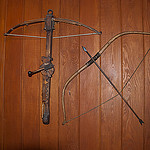
Verse 2 describes those enemies –how they hide “in the very darkness” – in its very depth — their bows and arrows ready to ambush “the upright of heart”. The “For, behold”, which opens the verse suggests that this verse as well is the voice of “you”, giving the reason for his advice to flee. (The Hebrew is without question marks, so the translator must decide –and the reader also– who is speaking.)

The speaker in verse 3 is more difficult to determine:

                                               For when the pillars are ruined, the righteous one what can he do? (V.3)

The decision of whose words these are depends upon the meaning of “the pillars”: possibly they refer to the people Israel, whom David rules over; but, as validly, they might be the bedrock of faith itself, the foundation of the nation; or perhaps they refer to the righteousness, in tenets and actions, of the upright of heart. However, whatever the reference –and the song itself gives no source– the speaker’s claim is that the supporting pillars are in ruins. That, in other words, all stability has been shattered and all that is essential, destroyed. The continuation of the question –“the righteous one what can he do?” is even bleaker: is it asking of the righteous what they can do to rebuild the shattered foundations or is it contemptuously deriding David’s inability to act? Is the question accusing David, or all of the righteous, of a failure of will? Or is it blaming their very righteousness –asking of what value righteousness is, of what purpose or use, since it was unable to ensure them protection? All of these interpretations share the common characteristic of reproach: the righteous could not prevent the destruction of the foundations. Therefore, the only recourse is flight, and as quickly as possible.

It would seem, then, that verse 3 continues voicing the words of “you”. This is no helpful observer, hoping to provide wise counsel, but rather, a mocking goader who hides behind words instead of “darkness”.

Instead of turning away from or fleeing from his attackers, be they waiting to ambush him by arguments or by actual arrows, David offers his own rebuttal, offers what is his declaration of belief: God will punish the wicked and reward the righteous. What David describes, in his certain faith, is a vision: a metaphor of God dwelling on His throne in His holy palace in heaven (v. 4)  — distant from humankind , yet judging it, dividing it into the righteous and the wicked and dispensing verdicts accordingly (v. 5).  God, in David’s vision, transforms the elements of the earth  –coal, sulfur, wind– into weapons: “Upon the wicked He will cause coals to rain; fire and brimstone and burning wind shall be the portion of their cup” (v. 6).
Flames will not only reveal the enemies’ hiding places, razing them, but they also ironically expose the backfiring of the wickeds’ attempts at ambush: darkness cannot protect them against light, be that light the gaze of God or the destructive fires of God’s punishment.

David ends his song with his conviction and belief firm and unshakable:
                                                For ADONAI is righteous; He loves
                                               
righteousness; the upright shall behold His face. (V.7)

Thus does David rebuilds the destroyed foundations.

“Righteous” and its variant, “righteousness”, repeat throughout the song, acting as a chord sounding the quality of both God and the upright of heart. First used by “you” in his audacious question (v. 3), the word “righteous” is restored to its proper possessor in David’s vision (v. 5) and declaration of faith (verse 7 describes God as “righteous” and praises its quality, “righteousness”, in His followers). The verb “perceive” – the upright will discern God’s presence – echoes the act of God’s “eyes” in verse 4, which “perceive” – examine with understanding – all of humankind. The Hebrew in verse 7 can be read to mean that it is the perception of the righteous that draws them closer to God or, in a more exact mirroring of verse 4, it is God whose face looks upon the righteous. In either interpretation, the encounter between the upright and the righteous God is envisioned.

“Face”, in the original Hebrew, is, like all of the words of the Psalms, and of the Tanach, written without vowels. Accordingly, the word can also, rather startlingly, translate as “innards”. This reading would fit the idea of God’s perception of the upright – their innermost being is discerned and judged worthy.

The parallels between verse 7 and verse 4 explain the imagery of the latter: God’s “eyes” perceive, His “eyelids” discern. That is, God examines, closely scrutinizes, humankind through His eyes both opened and closed. It would seem that the direct gaze of God’s eyes would be too intense for mortals to endure. Accordingly, the righteous are able to behold God’s face only if, as in David’s vision, God’s gaze is covered. His song ends with the implication that righteousness will accord its possessors the ability to, if not meet, at least withstand, God’s gaze.

bow and arrows photo


Literary Analysis of Psalm 10

That Song 10 is a continuation of, rather than separate from, Song 9 is clear from its first verse. It mentions neither the composer nor the instrument, setting it apart from Songs 3 to 9.*

But, although Song 9 does not end with a chord of resolution, still the abrupt beginning of Song 10, with its question  — more an anguished rebuke than an actual question —  is scarcely expected by the reader of or listener to Song 10 as it follows upon Song 9.  For Song 9 ends with the singer’s calling upon God to “Arise” and judge the nations. And yet the first half of Song 10 could have been composed by the very nations that have been judged unheeding, even wicked, by King David in Song 9. Thus v.1 describes God as “aloof”, “turning away” from those who seek Him, a vivid contrast to the judge and benefactor of Song 9 whom the singer envisions as drawing closer and closer to humankind. And though v. 2 asks that the wicked be caught in their own schemes and plottings, it is with the implication that they have not yet been defeated, in contrast to v. 16 of Song 9 which describes them as trapped like wild beasts. Verses 3 to 11 are the most troubling, for they give voice to the wicked, articulating their arrogance (v. 7), their certainty that they are mightier than God (v. 11), their belief that they can obey their instincts alone (v. 5); indeed, their very blasphemy itself (v. 4).

Song 9, v.18, declares, “Let the wicked turn back to Sheol”. It would seem as though the singer in Song 10 is himself turning his ear to Sheol, catching the echo of the words of the wicked and repeating back their thought and arguments.

Verses 12 and 13 mark a change in viewpoint. The singer calls upon God to judge the wicked and be merciful to their victims. But though he begins, “Arise, Adonai”, his cry is not the jubilant one ending Song 9. Rather it is a plea, a hope, a sob rather than a call of elation. He asks why the wicked scorn God, his question a censure not demanding an answer. Thus his question to the wicked is very different from  –the opposite of, in fact–  his  question to God in v.1. Indeed, verses 14 to 18 are his own answer to v.1:

The closing verses of the song transform it from a troubled pleading and questioning to a praisesong: v.14 voices his certainty that God heeds the innocent and the victimized; v.16 declares his belief that “Adonai is king forever and eternally”; verses 17 and 18 close the song with a request that is, at the same time, both a hope and a belief, that God will strengthen the hapless and take power from their oppressors.

V. 15 adds complexity to the fate the singer envisions for the wicked. It is composed of mercy rather than vengeance. In v. 6 the wicked one announces that he will never be called upon to account for his deeds or thoughts, that he will “never face evil” [accountability]. V. 15 makes clear that the wicked one is correct –he will not face retribution. But the powerful irony is in the reason for God’s leniency:

15. Break the arm [power] of the wicked one and the evil man, until You seek out his wickedness and find none.

It may be that the addition of the phrase “the evil man” to that of “the wicked one”  –for surely the one phrase, “the wicked one”, would suffice —  emphasizes the singer’s clear prophecy: God will bring about a purification within the wicked one, so that he will come to repudiate the evil in his nature. Only then will God “seek out his wickedness and find none”. The “until” is telling. This transformation will take place only when the wicked come to judge and transform themselves. Not until then can God ensure that “men who are of the earth might tyrannize no more” (v. 18).

The repetition of words referring to the wicked, throughout the song, gives a sense of the intensity of their passions, the power of their arrogant beliefs: “ambush” (v. 8, v. 9 twice); “schemes” (v. 2, v. 4); “seize” (v. 9 twice); “taunt” (v. 3, v. 13); “wicked” (v. 2, v. 3, v. 4. v. 13, v. 15).

In contrast, their victims are described with only two repeated nouns: “the hapless” (v. 8, v.10, v. 14) and “the orphan” (v. 14, v. 18).

But it is in the contrast of the word “cravings” as it refers to the desires of the wicked (v. 3) and to those yearnings of the lowly (v. 17), that the singer’s indictment of the wicked is declared. The repetition of the verb “seek” has an even more inclusive effect: the wicked refuse to seek God (v. 4), and believe their actions will incur no punishment (v. 13); indeed, God will break their power only when they themselves have relinquished it (v. 15).

The two verbs, “arise” and “seek”, dominate the song, acting as the singer’s summons to both God and humankind.


—————————————————————————————————————————————————————–

*Songs 1 and 2, together a unit, do not identify David as their composer. For one possible explanation, see analysis of Song 1 on this website. https://psalmsstudy.com/psalms-literary-analysis-by-chapter/literary-analysis-psalm-1/

Literary Analysis of Psalm 9 – G-d’s name is sanctified by the defeated wicked and the up-rise of the righteous

The address of the chapter as appears in Psalm 9:1, talks about the death / defeat of the wicked.
gods name is sanctified

Song 9 opens in a mood of jubilation. The verbs of joy surge: “acclaim” and “tell” of v. 2 build to “rejoice and  exult” and “sing” of v. 3. The exultation ebbs away as the singer –certainly he is David, so identified in v. 1, but, even more so, as he makes clear he is king over, and thereby judge of, his people– gives the reason for his acclamation: his belief that God approves of and agrees with his judgements and rulings. His proof  –that his enemies have not merely been defeated but, indeed, annihilated. The joy of verses 2 and 3 echoes in v. 12 as the singer tells his people to “sing a hymn to Adonai”. But though he proclaims that God will be merciful to the “lowly” (v. 13), to the “needy” and the “poor” (v. 19), he makes God’s mercy a condition of his exultation: his plea, “Have mercy on me”, in v.14, is followed, in v. 15, by “so that I might tell to all Your praise”.  Not until v. 20 does his jubilation ring out, with even more power than in the opening verses. His “Arise, Adonai” sounds a final chord of both triumph and rejoicing.

Perhaps because David, the King and Judge of Israel, describes himself as counselled and defended by God, the Ruler and Judge of all creation, his praisesong is structured –at least its first half– upon pairings:
–of verbs:     v. 2 : “acclaim” and “tell of”
v. 3: “rejoice” and “exult”
v. 4: “stumble” and “perish”
–of nouns:    v. 5: “judgement” and “adjudication”
–of adverbs: v. 6: “forever” and “eternally”
In echo of v. 5, v.9 pairs the verbs “judge” and “adjudicate”. (V. 7 offers a variation, a triplet of verbs: “gone”, “tear down”, “perish”.)
V. 10, twice repeating the noun “fortress”, prepares the structure of the second half of the praisesong:  although verses 11 to 21 do not repeat specific words, still, of the two statements making up each verse, the second simply re-iterates the first. (That there are three-parts to v.17 and v. 20 does not contradict this pattern, for each of these verses begins with a declaration that is followed by two descriptions of that declaration.)

David’s perception of the correspondence between his role as King and Judge of Israel and God’s role in creation, is described in the praisesong by two metaphors. Seemingly disparate, these two metaphors come together, by the song’s end, to form a symmetrical whole. The first metaphor gives the identifier, “Name”, to God and it is that aspect of God which David dedicates his song to: thus v. 3 declares “I will sing a hymn to Your name, O most High” (not, that is, to God directly, but, rather, to God’s name).* V. 11 continues the metaphor  –“so let those who know Your name trust You’–  and, accordingly, his own trust in God thus assured, David is then able in v. 11 to sing his praisesong not to God’s name but to God. In terrifying contrast are the wicked, trapped and destroyed by their own perfidy (v. 16 describes them as caught by one foot in the trap of their own devising, an image as suggestive of their savagery –for so is a wild beast netted– as much as it is of their self-defeat); they are condemned by God to perish, but, even more so, their very names are to be obliterated, struck from human memory, their lives –past, present and possibility of future– thereby wiped from time:
v. 6: “You blast the nations; You cause the wicked to perish; You blot out their name forever, eternally.”
Verse 7 adds, “their very recollection has perished.”
The hymn David sings declares that those who seek God seek the name that rules, judges, forgives and protects them: v. 11: “so let those who know Your name trust You, for You do not abandon those who seek You, Adonai.”
In bleak contrast, the wicked, their very names obliterated, are, in their very essence, unnamed, and, thereby, uncreated.

Just as the first metaphor describes David’s perception of God, so his second metaphor expresses his relationship –in fact, all of creation’s relationship– with God. The metaphor is one of placement, it locates, throughout the song, the exact space occupied by God. Thus it imagines a kind of map, placing God closer and closer to earth and its inhabitants. The perception is not of God as possessing a material form, a mass, rather it implicitly places the responsibility on humankind, which, depending on its worthiness, can conceive of God as drawing closer or further from it. Thus, in v. 5, God, upholding King David’s judgements and rulings, stays “on the throne as righteous judge” — the image is of God enthroned in a court of judgement, high above the human sphere. V. 8 re-iterates: “But Adonai shall stay forever; he has set up His throne for judgement”. The image of God in v. 10 as “a fortress for the oppressed, a fortress in times of trouble”, brings God closer, as the unshakeable haven for those who need protection. Verse 12 places God “in Zion”, dwelling among those who proclaim “His deeds among the peoples”. No longer enthroned in the heavens but now dwelling among the righteous, God, in David’s image, is, in v. 14, a benefactor. Not a stone barricade, but a giver of succor: “You who lift me from the gates of death”. This perception of God leads to the singer’s affirmation in v. 17, “Adonai is well known”, known by both works and judgments (“He works judgement”). The final spatial metaphor, in v. 20, is in the form of the singer’s exhortation to God, in his exultant “Arise”.

It is the exultant cry, “Arise”, that binds together the two metaphors: one of name. one of location. Both, descriptions of God, the indescribable. The singer is therefore able to assert that God is “well known”; certainly God is “known” to the singer by means of his metaphors. For they both identify and locate the One whom he triumphantly calls upon to fill the earth and the heavens: “Arise”.

After such peals of sound, the song abates. Its final chord is more poignant than it is admonitory: “let the nations know they are but men” (v. 21).

—————————————————————————————————————————————————————–
*Because God’s essence is unknowable, any descriptive word or epithet, be it noun or adjective, given to God, is, accordingly, a metaphor. A way He refers to us in a specific time, place ad circumstance.

gods name is sanctified


Literary Analysis of Psalm 8 – Oppositeness of God and “mortal man”

Psalm 8 describes the contrast between or oppositeness of God and humankind. An oppositeness that is immediately established in verse 2, with the juxtaposition of human frailty  — “infants and sucklings” — and God’s “strength”. And yet it is out of the vulnerability and helplessness of the infant that God’s strength emerges: “From the mouths of infants and sucklings, You have founded strength….”
eternal god limited humankind

Verses 2 and 4 make clear the nature of that strength: it is composed of the majesty and splendour of God (v. 2) manifested in creation: “Your heavens, the work of Your fingers, the moon and stars that You set in place” (v. 4).
What becomes apparent is that it is in the very oppositeness of God and humankind that the singer perceives God’s splendour. Thus verse 2 celebrates God’s majestic name “in all the earth”, God’s splendour “set above the heavens”. That is, the material world, humankind’s habitation (“earth”), and that which is above and beyond it (“above the heavens”), are together reflections of God’s awesomeness. Verses 4 and 5 re-iterate: the moon and stars, set in the heavens (v. 4), contrast with “mortal man” (v. 5), and yet, despite man’s insignificence, God takes “note of him”, pays “heed to him” (v.5).
Verse 7 answers the question the singer poses, of why God should attend to humankind: God has given stewardship of “the works of [God’s] hands” to man, who thereupon both embodies and protects that work and, accordingly, man gains his value from that role and obligation. Verses 8 and 9 list those creatures which humanity is to protect:
8. sheep and oxen, all of them, and wild beasts too;
9. the birds of the heavens, the fish of the sea, whatever travels the paths of the seas.
In short, custody of the earth is the grant given humankind by the creator of the earth and of its creatures.
The praisesong begins and ends with the singer’s recognition of “How majestic is Your name in all the earth” (v. 2, repeated exactly in v. 10). It is as though the praises that God’s creation sings themselves sound out God’s name. Just as the form of the physical world exposes the imprint of “God’s fingers” (v. 4).
The metaphor of “God’s fingers” is perhaps the singer’s most powerful voicing of the contrast between or oppositeness of God and “mortal man”. The metaphor is not reflective of the singer’s hubris. He is not portraying God as man’s image. On the contrary. His question, why God should heed mere mortals, is both a rebuke — do not forget, humankind, that you are “little less than God” — and a reminder of responsibility — you are “little less”. By preceding his question with a description of the splendour of the works of God’s “fingers”, the singer emphasizes the fragility of the creations of man’s fingers but also their reflected glory.
That God should give to humanity custody over the work of God’s fingers is most probably the perception that inspires and transports the singer’s praises. That stewardship is a gift not only majestic but it is also one that gives awesome responsibilities and obligations to its recipients. Therefore, or so it seems the singer declares, mortal mankind must be aware that all of its actions reflect God’s name: on this note, the song both begins and ends.
Psalm 8:2,10) “O HASHEM, our Master, how mighty is Your name in all the earth.”
“יְהֹוָה אֲדֹנֵינוּ מָה אַדִּיר שִׁמְךָ בְּכָל הָאָרֶץ”
eternal god limited humankind